






Jigawa Ramadan Feeding: Beyond Welfarism
By Muhd Zangina Kura, Dusted
As Muslims across the globe commenced the 2025 Ramadan fasting, the Jigawa State government launched its annual Ramadan Feeding Program, aiming to provide meals for over 5.3 million million people during the holy month.
While the initiative may appear to be an act of welfarism, it transcends mere charity, encompassing empowerment, job creation, poverty alleviation, and fostering economic growth and development.
According to the economic theory of multiplier effect, one dollar spent in fiscal stimulus eventually creates more than one dollar in growth. The intervention of government in economic processes is an important part for battling unemployment, underemployment, and low economic demand.
This theory appeared to be a classical interpretation of Jigawa state government Ramadan Feeding Program
The program’s unique approach lies in its mechanism: sourcing food items locally, preparing meals within beneficiary communities, employing local cooks—primarily women—and implementing robust monitoring and supervision systems. These features distinguish it from conventional feeding schemes.
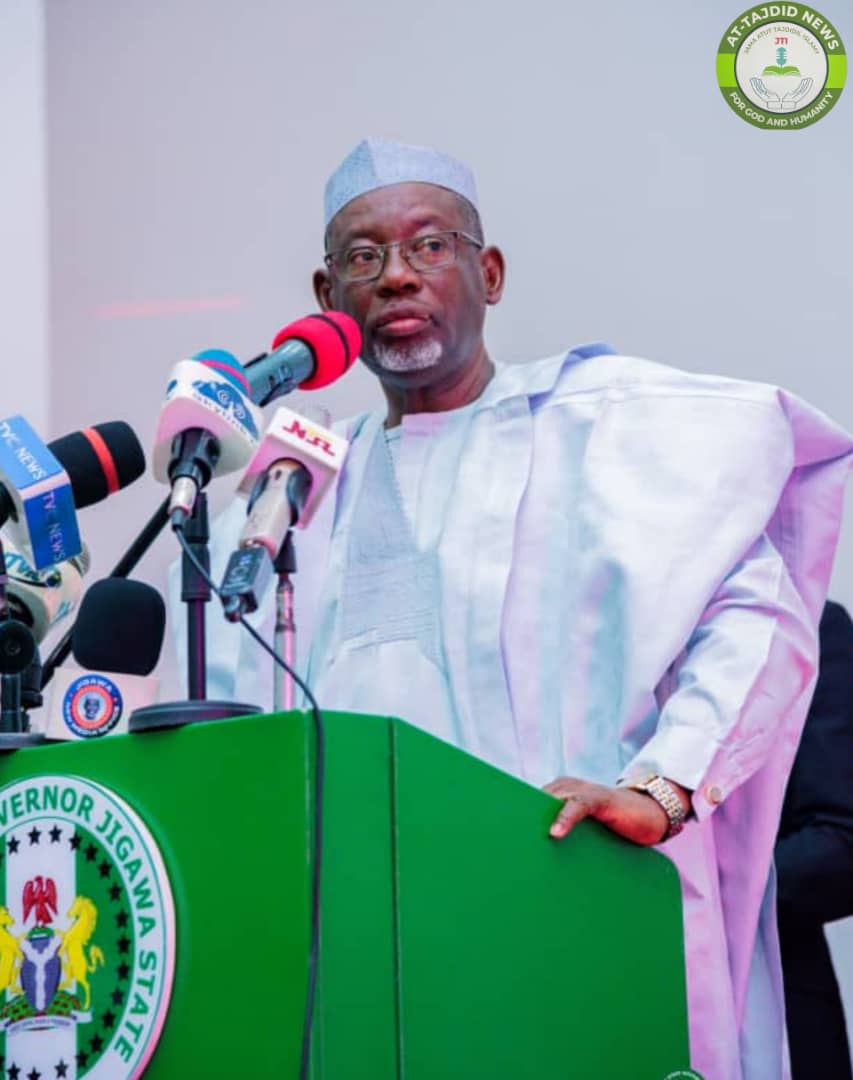
When Governor Malam Umar Namadi approved the allocation of over N4.8 billion for the program, some critics, seemingly disconnected from societal realities and lacking human compassion, were quick to condemn the initiative.
However, engaging with such narrow-minded persons is neither relevant nor necessary. Anyone with a sense of empathy, regardless of social, ethnic, or religious background, understands the significance of providing even a single meal to those in need.
Imagine the impact of feeding hundreds of thousands of underprivileged individuals who spend the whole day fasting under the uncertainty about their next meal. Even for those who do not believe in the divine, such a feeding arrangement deserves commendation.
It is the government’s responsibility to support citizens in fulfilling their moral and spiritual obligations, not just their economic and material needs.
The Jigawa State government, under Governor Namadi’s leadership, first introduced the Ramadan Feeding Program in 2024, shortly after the removal of fuel subsidies. The initiative was further enhanced and expanded for 2025.
During a briefing with the 30 selected food vendors tasked with managing the program across the state’s 30 constituencies, Governor Namadi emphasized that all vendors were chosen based on merit and are indigenes of Jigawa State.
Under the 2025 program, two feeding centers were established in each of the state’s 287 political wards, with additional centers set up in higher institutions, and major markets. A total of 690 vendors were contracted to supply cooked meals directly to these centers.
The program has also created employment opportunities for 3,312 women cooks, selected from within the beneficiary communities.
Each center to serves meals to over 265 people daily, with the approved menu including Kunu, Kosai, and *Jollof Rice*. Every day the program will feed 185,000 for the period of 30 days.
Governor Namadi issued strict directives to vendors, mandating that all food items be sourced locally within their constituencies. For instance, a vendor from Auyo is prohibited from sourcing ingredients from Hadejia. Additionally, vendors were instructed to hire cooks from outside their families to broaden the program’s economic impact.
Governor Namadi reiterated that the feeding program aligns with his administration’s policy of empowering citizens through entrepreneurship. The initiative is designed to promote prosperity and growth by stimulating local economies and creating sustainable livelihoods.
The program is overseen by the Office of the State Commissioner for Special Duties, Hon. Auwal Dalladi Sankara, while the feeding exercise is managed by a 40-member committee chaired by the State Commissioner for Basic Education, Hon. Yunusa Danzomo.
Commissioner Sankara disclosed that all food vendors underwent comprehensive training and sensitization to ensure the delivery of high-quality meals to beneficiaries
The state government has equally approved a speacial package of food items to be distributed to all civil servants as Ramadan gesture.
In collaboration with local government chairmen, the ministry also provided training to women cooks, emphasizing personal and environmental hygiene during food preparation and beyond
The government has adopted stringent measures to ensure the delivery of hygienic and nutritious meals to beneficiaries.
Governor Namadi assured vendors and cooks that the program would economically empower them while warning against any breaches of public trust.
He vowed to take decisive action against any violations of contractual agreements or compromises in the quality of meals provided.
The Jigawa State Ramadan Feeding Program stands as a testament to the government’s commitment to holistic development, combining compassion, walferrism with strategic economic empowerment. It is a model that other states and nations could emulate to address both immediate needs and long-term growth.,




