
HarvestPlus Support 30,000 Jigawa Farmers With Bio-Fortified Seeds for Free
No fewer than 30,000 small holder farmers in Jigawa state targeted to benafits from free distribution of Bio-Fortified seeds supply by HervestPlus to the state.
The Jigawa State Government, in collaboration with HarvestPlus, has flagged off the distribution of bio-fortified seeds to 30,000 smallholder farmers for multiple production across the 27 local government areas in the state.
Speaking at the flag-off ceremony for the distribution of the seeds held in Dutse, capital, the state Governor Malam Umar Namadi said the program is carrying out ny the state government incollaboration with HervestPlus.
Governor Namadi noted that, the partnership underscores his administration’s commitment to partnering with organizations such as HervestPlus to improve the agricultural sector and the overall well-being of the people.
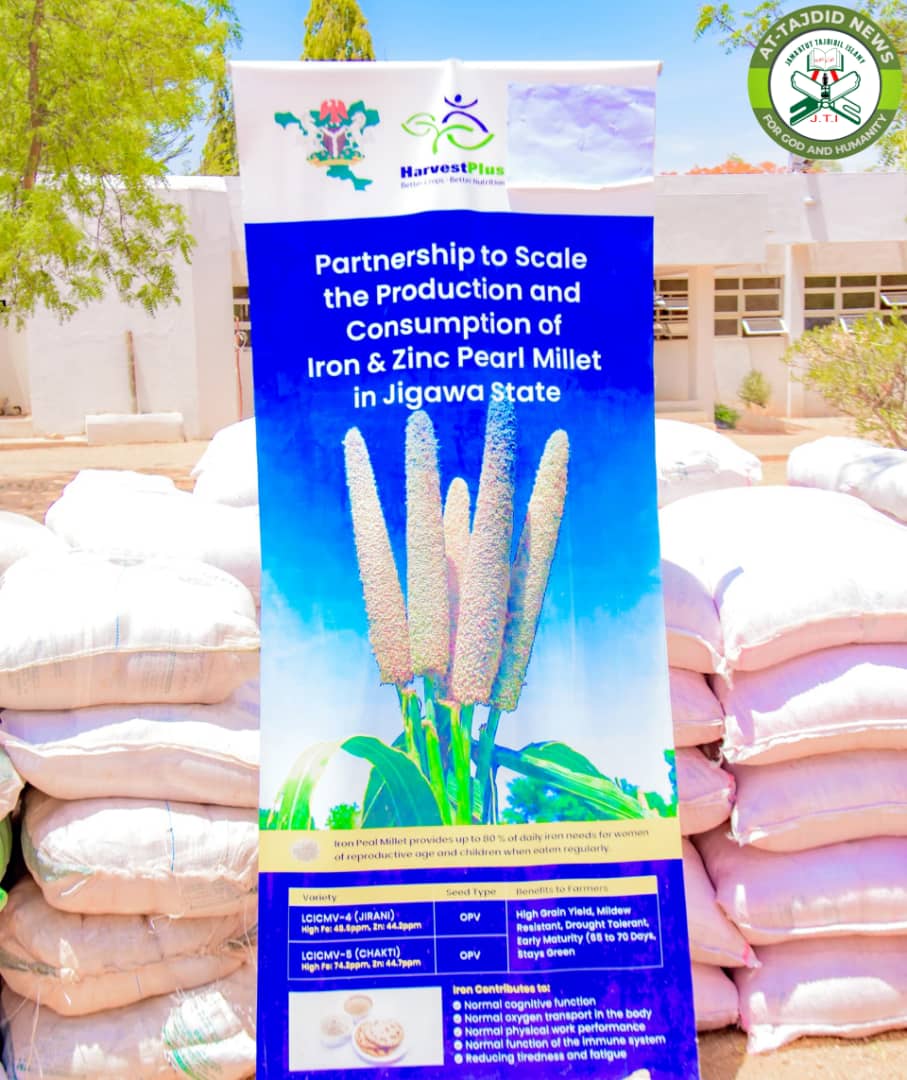
He explained that the new improved seed varieties are climate-resilient and fortified with iron and zinc, for enhancing their nutritional value.
Governor Namadi noted that these seeds have the potential to increase yields by over 100% compared to ordinary seeds, in addition to being highly resistant to drought and pests.
“I am optimistic that these improved seeds will boost farmers’ incomes, strengthen national food security, and help address malnutrition due to their added nutritional benefits,” he said.
“I urge Jigawa farmers to adopt these seeds and follow proper planting guidelines. On our part, we will provide support through extension workers for continuous monitoring, advice, and timely interventions when needed” Governor Namadi added.
The Country Manager of HarvestPlus, Dr. Yusuf Dollah Fou’ad, stated that the distributed bio-fortified seeds include maize and millet and the project was . Funded by Jesus Christ Church of Latter-day Saints
Dr. Yusuf assured farmers that the seeds are the product of extensive scientific research and have been successfully used in various regions worldwide.
“Our partnership with the Jigawa State Government aims to provide these seeds to 30,000 smallholder farmers to enhance productivity, create jobs, reduce poverty, improve food security and nutrition,” he said.
One of the farmers who tested the seeds, Malam Almu Dandodo Gumel from Gumel, shared his experience, stating that he cultivated the millet seeds over two farming seasons and confirmed their climate resilience and high yield—almost three times greater than ordinary seeds.
Muhammad Zangina Kura